
In the fast-paced world of travel, information is the most valuable currency. Whether it’s a commuter rushing to catch a morning train or a family navigating a massive international airport, the difference between a seamless journey and a stressful one often comes down to one thing: communication.
For businesses in the transportation sector, static posters and printed boards are no longer enough. To keep up with the demands of 2026, LED digital signs have become the gold standard for keeping travelers informed in real time.
In this post, we’ll explore how LED digital signage is transforming transportation hubs—from the terminal to the parking garage—and why it’s a “must-have” for your business signage strategy.
Airports: Managing the “High-Flying” Hustle
Airports are perhaps the most complex environments in the transportation industry. With thousands of moving parts—gate changes, security wait times, and weather delays—passengers need data that updates in a heartbeat.
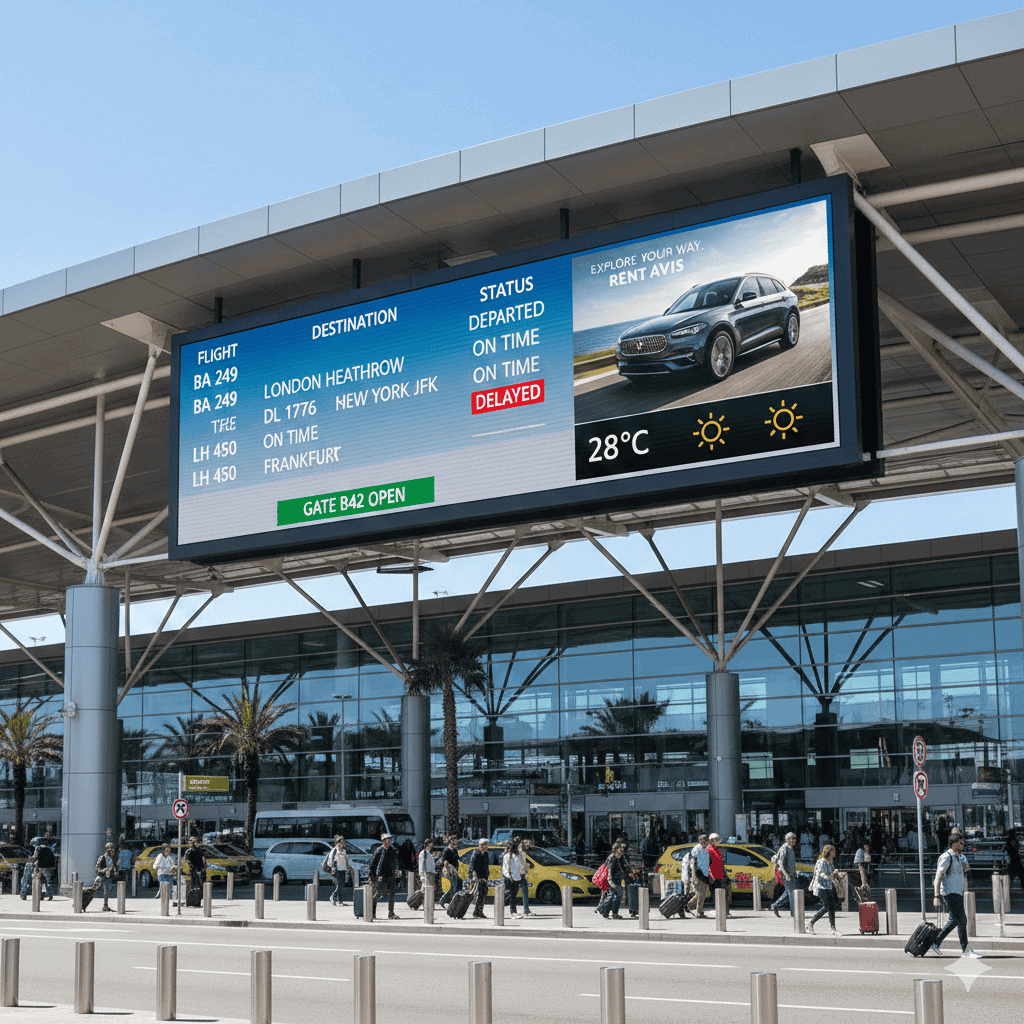
- Flight Information Display Systems (FIDS): High-resolution LED walls can display massive amounts of data clearly, even in high-glare environments. When a flight is delayed or a gate changes, the update is pushed instantly across the entire network, preventing bottlenecks at information desks.
- Wayfinding: Large-scale digital “totems” and overhead LED displays guide passengers through “the maze,” pointing them toward baggage claim, lounges, or connecting flights.
- Real-Time Security Alerts: In the event of an emergency, your entire signage network can be programmed to switch to high-visibility safety alerts, providing clear evacuation instructions in multiple languages.
Train Stations & Bus Terminals: Clarity in Motion
For daily commuters, every second counts. They don’t want to search for a paper schedule; they want to know exactly when the next bus or train is pulling in.
- Live Countdown Timers: LED signs at platforms and bus stops provide GPS-fed arrival predictions. This “perceived wait time” reduction significantly boosts passenger satisfaction.
- Service Disruption Notifications: If there is a track maintenance issue or a route detour, digital signs can display alternate routes or shuttle bus locations immediately.
- Dynamic Advertising: While passengers wait, high-brightness LED screens can rotate local advertisements or news snippets, creating a secondary revenue stream for the terminal operator.
Parking Facilities: The First and Last Impression
The traveler’s journey often begins and ends in the parking lot. LED signage here isn’t just a luxury; it’s a critical tool for traffic management and safety.
- Space Availability: Imagine the relief of a driver seeing a bright LED sign at the entrance stating “Level 2: 45 Spaces Available.” Real-time parking guidance systems reduce congestion and fuel emissions.
- Rate Transparency: Digital displays allow for dynamic pricing and clear communication of hourly or daily rates, which can be updated remotely based on peak demand.
- Safety & Security: Well-lit LED signs displaying “Exit” paths, emergency help-point locations, and pedestrian warnings ensure that the facility feels safe 24/7.
The “LED Advantage” for Your Business
Why choose LED over traditional digital displays? For the transportation industry, the answer is durability and visibility.
- Sunlight Readability: Our outdoor LED signs are designed with high-nit brightness that remains perfectly legible even in direct midday sun.
- Weather Resistance: Built to withstand rain, snow, and extreme temperatures, these signs are “industrial-grade” for 24/7 operation.
- Centralized Control: Manage one sign or one thousand from a single cloud-based dashboard. One click updates every terminal in your network.
Ready to Upgrade Your Transit Hub?
In the world of transportation, silence is rarely golden—it’s usually a sign of a confused passenger. By investing in real-time LED digital signage, you aren’t just buying a screen; you’re buying a better customer experience.