
Choosing between a hanging and a floor standing digital sign is one of the first decisions you will make when adding an LED poster display to your business. The mounting style affects where customers see your message, how much floor space you keep, and even what your landlord allows. Both options can play bright, dynamic video content, but each one fits a different storefront situation.
LED poster and window signs help businesses promote offers, introduce products, and share brand messages in high-traffic areas. The display itself is only half of the equation. How it stands, hangs, or mounts determines whether it actually works in your space. This guide compares hanging and floor standing digital poster signs so you can match the right option to your layout.
The Two Mounting Styles at a Glance
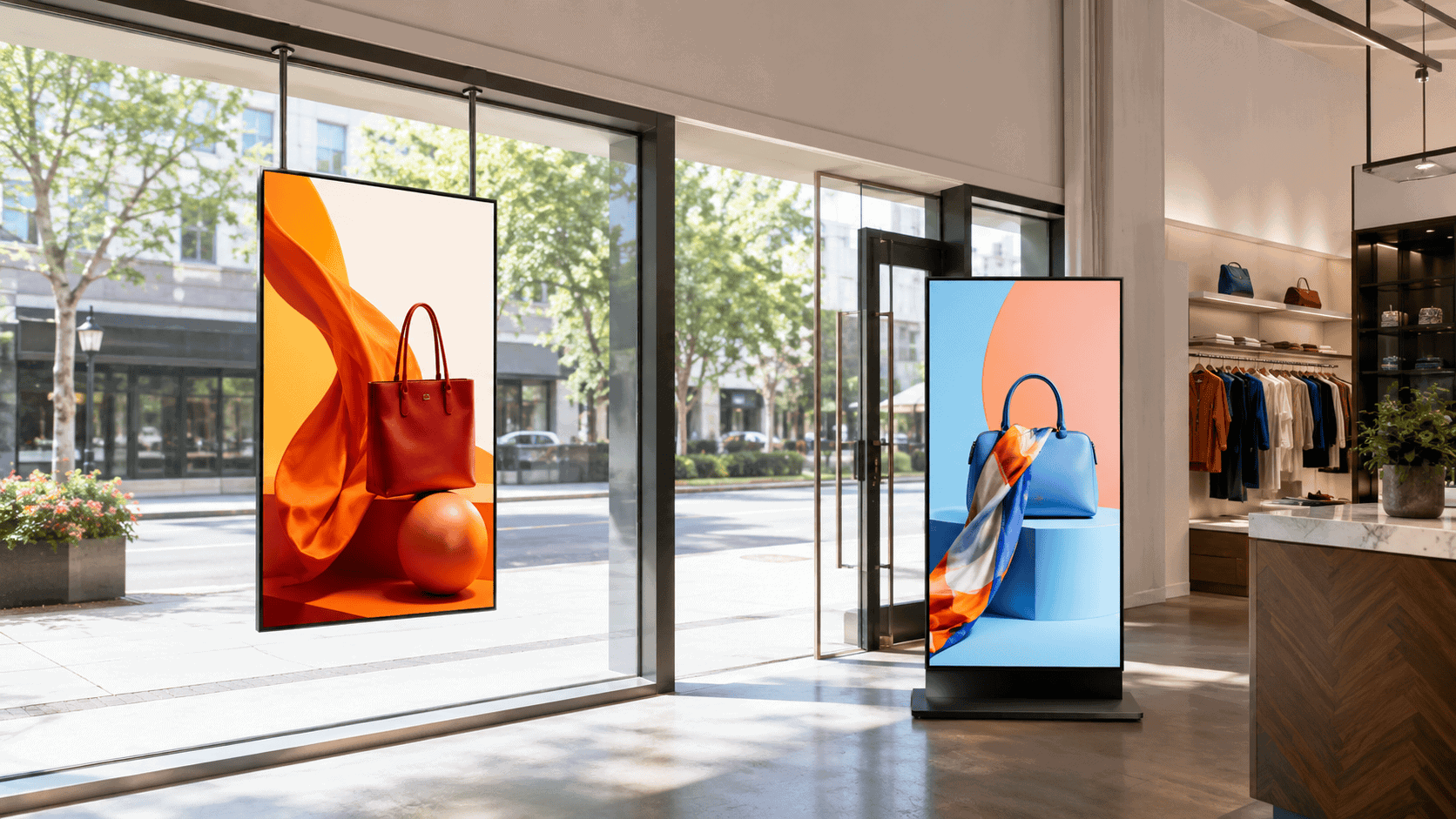
Floor standing digital signage displays are built to sit directly on the floor. They are often positioned at eye level and placed in open spaces where people naturally walk, which is why they tend to deliver a stronger visual impact in the right location. They work well for retail stores, lobbies, and any spot where customers move freely past the screen.
Hanging digital poster signs attach to a wall, window frame, or overhead structure. Wall-mounted systems generally have a lower initial hardware cost because the enclosure requires less steel and structural material than a full floor-standing unit. A hanging display keeps the floor clear, which can make a small store feel more open.
Space Constraints: What Your Storefront Can Fit
Start by measuring the area where you plan to place the sign. A floor standing display needs a clear footprint. It should sit where customers can step back far enough to read the screen without blocking a register, doorway, or display table. A narrow walkway is usually better served by a hanging sign because it removes the obstacle entirely.
Ceiling height also matters. A hanging sign needs enough vertical space so it does not interfere with light fixtures, ceiling fans, or signage that already hangs in the store. A floor standing unit does not depend on ceiling structure at all, which makes it easier to place in spaces with low or unusual ceilings.
Think about flexibility as well. Floor standing displays can be moved when you rearrange the store or run a seasonal promotion in a different part of the space. Hanging displays are more permanent, and moving them means uninstalling and remounting hardware.
Window Frame Types and Mounting Limits
Digital poster signs are often placed in or near storefront windows so the message reaches people passing by. That means the window frame itself may need to support the display. Not every frame is built for that job. A lightweight frame holding a large glass window may not handle the weight of a commercial display and its mount.
Installers often use a universal mount to attach a display to a wall or frame. One installer noted that mounting was not a problem with a 55-inch universal mount, but the heat venting would not be as effective once the display was in place. That is a practical concern because digital displays generate heat, and a mount that presses the screen tight against a frame can restrict airflow.
Before you choose a hanging option, confirm that the mounting surface is strong enough, and leave enough room around the vents. If the frame cannot support the display, a floor standing sign gives you the same visual result without attaching anything to the structure.
Landlord Restrictions and Property Rules
Many business owners lease their space, and the lease often controls what can be attached to the walls, ceiling, or windows. Some landlords restrict drilling into the building exterior or require permission for any wall-mounted equipment. A hanging digital poster sign that touches the storefront window may also face signage restrictions, so it is smart to review your lease and talk to the property manager before installation.
Floor standing units avoid drilling almost entirely. They sit on their own base and can be removed at the end of a lease without leaving holes in the wall. That makes them attractive for short-term leases, pop-up shops, and shared retail spaces. Even so, you should confirm that the sign is allowed in common areas or in front of leased storefront space.
Foot Traffic Flow and Eye-Level Visibility
Where customers look depends on how the space is arranged. Floor standing digital signage often provides stronger visual impact because it is positioned at eye level and placed in open spaces where people naturally walk. When a customer enters and faces forward, the screen sits right in their line of sight.
A hanging display works well when you want to keep the path clear and place the message above the clutter. It can be seen over counters, shelves, and other fixtures, which makes it useful in busy retail environments. The trade-off is that customers have to look up, so the message needs to be simple enough to read at a glance.
For window-facing placement, consider what the street view looks like. A floor standing sign placed just inside the window can draw attention from the sidewalk. A hanging sign mounted directly in the window frame can do the same while keeping the floor area open for displays or foot traffic.
ADA Clearance and Accessibility
Accessibility should be part of your placement decision. A floor standing unit cannot block a walking path, doorway, or emergency exit, and it should not force customers in wheelchairs or with limited mobility to go around it. The Americans with Disabilities Act and local building codes include specific clearance rules for paths of travel, so check the official requirements for your space before finalizing the location.
Hanging signs avoid floor-level obstacles entirely, but they introduce their own accessibility concern. The bottom edge should clear the walking space so people do not bump into it. Confirm the required clearance with the relevant official source or your building manager so the sign never becomes a hazard.
Stability, Durability, and Heat Management
Hanging digital poster signs is often more stable because it is secured directly to the building structure. It will not tip, slide, or shift when customers bump into it. Free standing kiosks typically offer more flexibility, but they rely on their own base for balance, so the base needs to be heavy enough and wide enough to stay steady in a busy store.
Durability is a factor in both choices. A wall-mounted display stays in one place, which reduces wear from movement. A floor standing display can be repositioned for events or cleaning, but each move adds a little stress to the unit and the cable connections.
Heat management deserves attention in both cases. Displays need airflow around their vents. A wall mount that fits too snugly can reduce venting effectiveness, as the installer experience mentioned earlier showed. Floor standing units usually have open space around them, but if the screen sits in a corner or against a wall, the airflow can still be blocked.
Content Management Works the Same on Both
Your mounting choice does not change how you manage content. Both hanging and floor standing digital poster signs connect to a cloud-based content management system, so you can upload, schedule, and push content to every screen from one place. That makes it easy to run real-time updates, daily promotions, and advertising campaigns across multiple displays without touching each screen individually.
If you already run outdoor or indoor LED displays, adding a poster sign to the same platform means all screens stay in sync. Schedule today’s special, update store hours, or rotate a video campaign, and the change reaches every connected display at once.
Hanging vs Floor Standing Digital Sign: Comparison Table
| Consideration | Hanging Digital Sign | Floor Standing Digital Sign |
| Floor space | Keeps the floor clear | Needs a clear footprint |
| Visual impact | Visible above counters and fixtures | Eye-level placement in open spaces |
| Stability | Often more stable when mounted properly | Freestanding, can be moved as needed |
| Hardware cost | Generally lower, less structural material | More steel and structural material |
| Installation rules | May require landlord approval and drilling | No drilling, but placement must clear walkways |
| Content | Same cloud-based CMS | Same cloud-based CMS |
How to Make the Final Decision
Start with the physical space. Measure the floor and check the ceiling. If floor space is tight, a hanging sign is the practical choice. If the store has an open area where customers naturally gather, a floor standing sign placed at eye level will likely earn more attention.
Then confirm the rules. Review the lease, talk to the landlord, and check accessibility requirements before buying hardware. A sign you cannot install is not a bargain at any price.
Finally, think about how you plan to use the display. If the sign will stay in one spot for years, a wall-mounted model offers stability and a lower initial hardware cost. If you may move it between locations, rearrange the store, or run temporary promotions, a floor standing display gives you that flexibility.
For businesses in the market for a new display, start with the LED poster sign options at LED Miami Signs. The right mounting style, paired with the right screen, turns your storefront into a message that customers cannot miss.
Frequently Asked Questions
Can a floor standing digital sign show the same content as a hanging sign?
Yes. Both mounting styles connect to the same cloud-based content management system, so you can upload, schedule, and push the same video or image content to every screen. The choice of mount affects placement and visibility rather than the type of content a display can play.
Do wall-mounted digital signs cost less than floor standing units?
Generally yes. Wall-mounted systems tend to have a lower initial hardware cost because the enclosure requires less steel and structural material than a full floor-standing unit. A floor standing display needs a stable base and more structure to stand safely, which adds to both hardware and shipping costs.
Which mounting style is more stable?
Wall-mounted digital signage is often more stable because it is secured to the building structure. Free standing kiosks offer more flexibility and can be repositioned, but they rely on their own base for balance. Choose a wall mount when the sign must stay fixed and a floor standing unit when you may move it.
Does mounting a digital sign affect heat venting?
It can. Ventilation is an important part of any digital display installation. One installer noted that mounting was easy with a 55-inch universal mount, but heat venting would not be as effective once the display was mounted. Leave enough space around the vents and follow the manufacturer’s installation guidance.